UK Water Regulations Explained
Most people are unaware that there are legal requirements to take into consideration when connecting an irrigation system to a domestic garden tap. This simple guide provides you with the information that you need to make sure you stay on the right side of the law!
What you can connect to the mains water supply in England and Wales is regulated by an Act of Parliament – the Water Supply (Water Fittings) Regulations 1999; these regulations superseded the old water bylaws in England and Wales. The Regulations aim to ensure the safety, efficiency, and sustainability of water usage within buildings in the United Kingdom.
In Scotland the appropriate regulations are Water Supply (Water Fittings) (Scotland) Byelaws 2014. For Northern Ireland, the regulations are the Water Supply (Water Fittings) Regulations (Northern Ireland) 2009. For the purposes of this article, we will be concentrating on England and Wales.
Water Regs UK states that the installation of an irrigation system must be notified to the local water undertaker. Garden watering systems are generally notifiable unless they are designed to be operated by hand. The undertaker normally has ten working days to respond to a valid notification.
Do I need to notify my water company about a garden irrigation system?
- Hand-operated watering systems are generally treated differently.
- Fixed, automatic or permanently installed systems normally require notification.
- The customer should contact their local water undertaker before starting work.
- Conditions may vary according to the system and contamination risk.
- Work should not proceed until consent has been received or the notification period has passed.
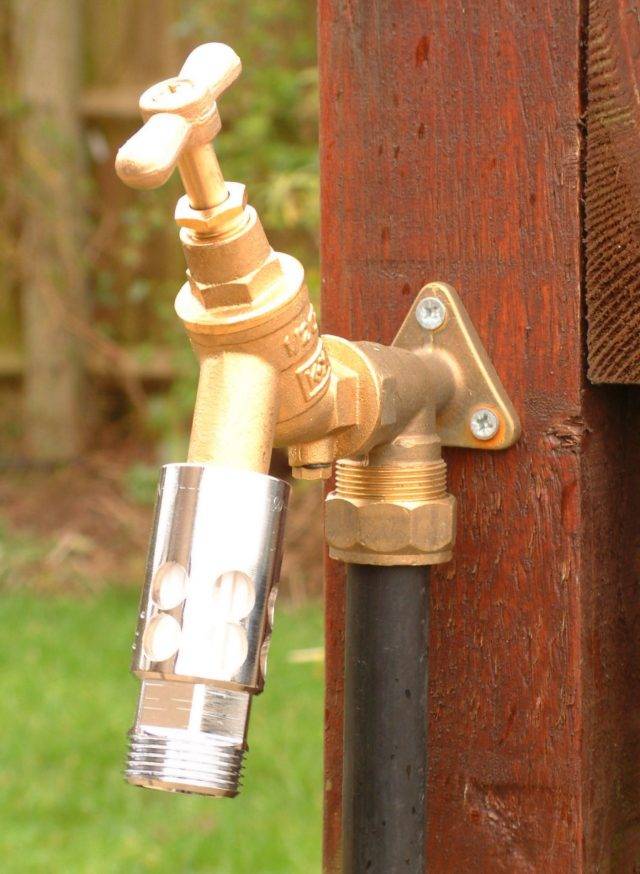
If you are a domestic house then you must have a double check valve on all ‘hose union’ taps – outside taps to you and I. The double check valve is designed to prevent water and contamination flowing backwards from the garden and into the water main.
With a double check valve fitted, then you can run border sprinkler systems which have their sprinklers more than 150mm above ground level. You can also use a hand-held hose.
If you want to run a drip system (either for borders or hanging baskets) then you also need a DB Valve. This is a special valve which fits onto the tap or after a timer which again prevents back-flow. You still need the double check valve as well, but the DB Valve provides a ‘belt and braces’ solution. The DB Valve has to be fitted higher than the highest dripper and has to be fitted after the tap or timer, as it will not stand full mains pressure for prolonged periods of time.
One of the sad things about many of the ‘consumer’ irrigation companies is they never tell the customer that a DB Valve is necessary to comply with the law.
Steps to comply with the Regulations
- Identify the proposed irrigation system.
- Contact the local water undertaker.
- Submit notification where required.
- Confirm the contamination category.
- Install the approved backflow protection.
- Keep valves accessible for inspection and maintenance.
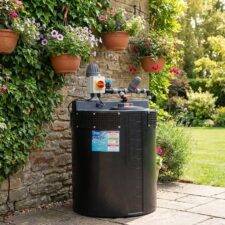
2026 UPDATE: The only UK manufacturer of DB valves has now ceased production. This leaves a difficult situation where the regulations require a fitting that cannot be purchased. There are two options – speak to you local water company to see if they are happy to allow the installation without a DB valve, or install a pump and tank unit. The pump and tank gives compliance to the category above the DB Valve (category 5 compared to category 4).
This guide provides general information and does not replace approval or advice from your local water undertaker.
Written by Access Irrigation’s technical team
Last technically reviewed: August 2026