Garden Border Watering Kits
-
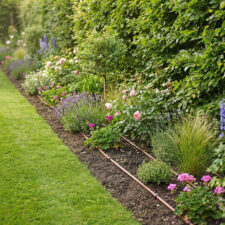
Flower Bed and Border Drip Irrigation Kit
From: £56.00 (excl VAT)
From: £67.20 (inc VAT)
-
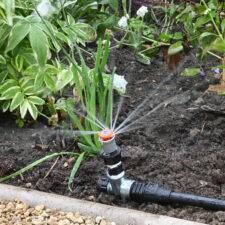
Border Spray Watering Kit
From: £165.00 (excl VAT)
From: £198.00 (inc VAT)
-
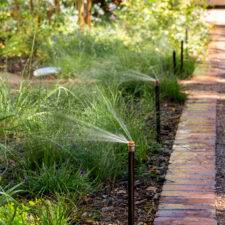
Pop-up Flower Border Spray Kit
From: £314.00 (excl VAT)
From: £376.80 (inc VAT)
-
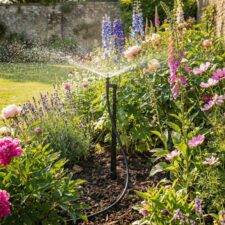
Border Sprinkler Watering Kit
From: £78.00 (excl VAT)
From: £93.60 (inc VAT)
-
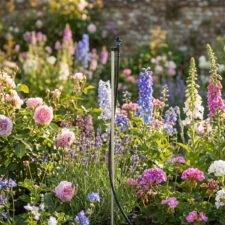
Tall Stake Border Sprinkler Kit
From: £169.00 (excl VAT)
From: £202.80 (inc VAT)
Our garden border watering kits provide an easy and effective way to water flower beds, shrub borders and established planting. The range includes drip irrigation, mini sprinkler, tall sprinkler and pop-up watering systems, giving you a choice of solutions to suit different garden layouts, planting heights and installation requirements.
For maximum water efficiency, a border drip irrigation kit applies water directly to the soil around the plants. Where overhead watering is preferred, our sprinkler kits provide gentle, even coverage across the border, with tall riser options for established planting and discreet pop-up systems where appearance is important.
All of the kits are designed to make installation straightforward and can be connected to a suitable garden water supply. Use the products below to choose the right system for your border, or see our comparison guide further down the page.
Which border watering system should I choose?
| Watering kit | Watering method | Best suited for | Coverage | Key advantage |
|---|---|---|---|---|
| Flower Bed and Border Drip Irrigation Kit | Pressure-compensated dripline | Flower beds, shrub borders and mixed planting | Up to 15m² (small kit) or 60m² (large kit) | Applies water directly to the soil for efficient, even watering with minimal water loss |
| Border Sprinkler Watering Kit | Mini sprinklers on low risers | Low to medium-height planting and general flower borders | Up to 40m² (small kit) or 75m² (large kit) | Simple, economical sprinkler system with different nozzles available to suit border widths |
| Border Spray Watering Kit | Gentle half-circle spray sprinklers | Established borders and more delicate planting | Approx. 2.3m × 15.6m at recommended pressure and flow | Pipework and sprinklers run along the front of the border, making installation easier in established planting |
| Tall Stake Border Sprinkler Kit | Mini sprinklers on tall galvanised risers | Tall, dense or established planting | Up to 75m² | Sprinklers sit approximately 80cm above ground level to help throw water over surrounding foliage |
| Pop-up Flower Border Spray Kit | Pop-up sprinklers with gentle spray nozzles | Landscaped borders where appearance is important | Approx. 15m × 2.5m | Pipework is buried and the sprinklers retract when not in use, leaving virtually no visible irrigation equipment |
Drip irrigation or sprinklers for garden borders?
Both drip irrigation and sprinkler systems can provide effective automatic watering for flower beds and garden borders, but they work in different ways and suit different types of planting.
Drip irrigation applies water slowly and directly to the soil around the plants. This makes it particularly water-efficient, as there is very little loss through evaporation or wind drift. It also keeps foliage dry and can be hidden beneath mulch, making it a good choice for mixed borders, shrubs and areas where discreet watering is important.
Sprinkler systems water over a wider area from above and can be particularly useful in densely planted or established borders. Low-level sprinklers are suitable for open planting, while taller risers can project water above surrounding foliage. Pop-up sprinklers offer a more permanent and discreet solution, with the heads retracting below or close to ground level when the system is not operating.
For most borders where water efficiency is the priority, drip irrigation is usually the best choice. Sprinklers may be preferable where the planting is dense, access to the soil is difficult, or where a wider area needs to be watered from a smaller number of outlets.
Watering established and heavily planted borders
Established borders can be more difficult to water effectively because dense foliage may prevent water from reaching all parts of the bed. Low-level sprinklers can become obstructed by mature plants, while installing new pipework through a heavily planted border may also be difficult.
For taller or denser planting, sprinklers mounted on raised stakes can be a good solution. By positioning the sprinkler above much of the surrounding foliage, the water can be distributed more evenly across the border and reduce the risk of dry areas caused by plants blocking the spray.
Where a more discreet permanent system is required, pop-up border sprinklers are another option. The supply pipe can be buried along the front of the border, with the sprinkler heads rising when watering and retracting when the system is switched off. This keeps the irrigation system largely out of sight while avoiding the need to run pipework through established planting.
For very densely planted beds, drip irrigation can still be an excellent choice where the dripline can be positioned around the plants. Because the water is applied directly to the soil, it is unaffected by foliage blocking the spray.
Automating a border watering system
A border watering system can be easily automated so that plants are watered regularly without the need to connect a hose or turn the system on manually each time.
For simple installations connected to an outside tap, a battery-operated tap timer can be fitted between the tap and the irrigation system. This allows watering to start automatically at set times and is ideal for most domestic garden borders.
Larger or more permanent systems can be connected to an automatic irrigation controller and solenoid valves, allowing different areas of the garden to be watered independently. This is particularly useful where lawns, borders, hedges and other planted areas have different watering requirements.
Automatic watering is especially useful during hot, dry weather or when you are away from home, helping to provide plants with consistent watering while avoiding unnecessary overwatering. For best results, adjust the watering frequency and duration according to the weather, soil type and needs of the plants.
We offer free deliveries on all orders of border watering kits over £150* (+VAT). Most of our kits will be delivered in 3-5 days, though we also have a 24 hour Priority Dispatch service should you require your components in a hurry.
For more information check out our guide to Ways to Water Your Flower Borders or give us a call on 01788 823 811.
* Mainland England, Wales, and Southern Scotland only.
Frequently asked questions
Which type of watering system is best for garden borders?
The best system depends on the type of planting and how you want to water it. Drip irrigation is usually the most water-efficient option because it applies water directly to the soil around the plants.
Sprinkler systems can be better for densely planted or established borders, particularly where raised sprinklers can distribute water above surrounding foliage.
Is drip irrigation better than sprinklers for flower beds?
Drip irrigation is generally more water-efficient than sprinklers because water is delivered directly to the soil with very little loss through evaporation or wind drift. It also keeps plant foliage dry. Sprinklers can, however, be easier to install in some established borders and are useful where you need to water a wider area from a smaller number of outlets.
How do I water a heavily planted or established border?
For established borders, consider either tall sprinkler risers, which raise the spray above surrounding foliage, or a system installed along the front of the border. Pop-up sprinklers are particularly suitable for permanent installations because the pipework can be buried and the sprinkler heads retract when not in use. Dripline is another good option where it can be positioned around the existing plants.
Can a border watering kit connect to an outside tap?
Yes. Most domestic border watering kits can be connected to a normal outside garden tap using the appropriate hose or connector. A pressure regulator may be required with some drip and sprinkler systems to provide the correct operating pressure.
If the bed is some distance from the tap, use plain 16mm pipe. For a temporary connection, all of the kits allow a hosepipe with a Hozelock-type fitting to be connected directly to the watering system.
Can I automate a garden border watering system?
Yes. A simple border watering system connected to an outside tap can be automated using a battery-operated tap timer. Larger installations can use an irrigation controller and solenoid valves, allowing different areas of the garden to be watered independently and at different times.
How much water pressure do I need for a border sprinkler system?
The pressure required depends on the type of sprinkler system and the number of sprinklers operating at the same time. Good water flow is just as important as pressure. Each of our border watering kits provides recommended pressure and flow information, and our technical team can help if you are unsure whether your water supply is suitable.
Can border irrigation pipe be hidden?
Yes. Dripline can often be concealed beneath mulch or amongst planting, while permanent sprinkler systems can use buried supply pipe.
Pop-up sprinkler systems are particularly discreet because the sprinkler heads rise when watering and retract when the system is switched off.
Can I connect several flower beds to one irrigation system?
Yes. Several borders can be supplied from the same irrigation system, provided the available water pressure and flow are sufficient. Separate beds can be connected using supply pipe and branch fittings, or divided into separate watering zones where the total water requirement is too high to operate everything at once.
Can I use border drip irrigation during a hosepipe ban?
Drip irrigation systems may be permitted during some hosepipe restrictions, particularly when used with an automatic timer, because they apply water efficiently and directly to the soil. However, hosepipe ban rules vary between water companies and restrictions can change, so you should always check the current rules published by your local water supplier before using an irrigation system.