Drip Irrigation Line
-
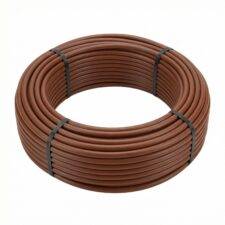
Permadrip Pro Pressure Compensating Drip Irrigation Pipe
From: £30.00 (excl VAT)
From: £36.00 (inc VAT)
-
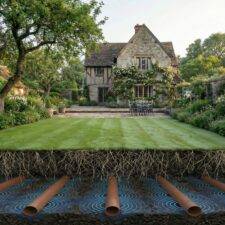
Permadrip Ultra dripline for subsurface irrigation
From: £122.00 (excl VAT)
From: £146.40 (inc VAT)
-
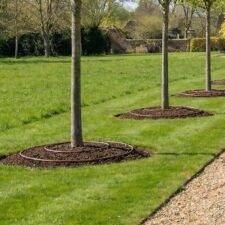
Pressure compensated drip irrigation for trees
From: £34.00 (excl VAT)
From: £40.80 (inc VAT)
-
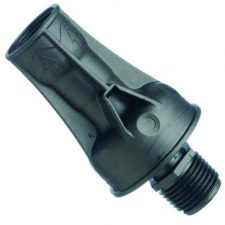
Leakage Prevention Device
From: £7.30 (excl VAT)
From: £8.76 (inc VAT)
-
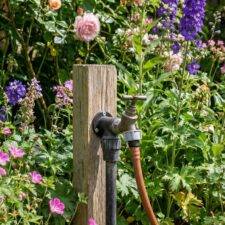
Dripline Starter Pack
From: £8.00 (excl VAT)
From: £9.60 (inc VAT)
-
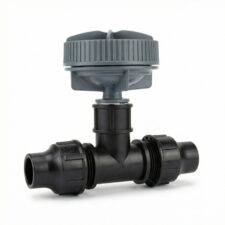
Air/Vacuum Relief Valve
From: £17.00 (excl VAT)
From: £20.40 (inc VAT)
-
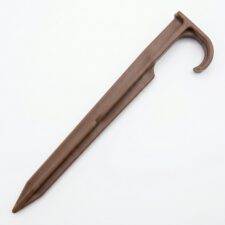
Dripline Anchorage Pegs
From: £9.80 (excl VAT)
From: £11.76 (inc VAT)
Shop professional 16mm pressure-compensating drip irrigation line for flower beds, shrub borders, hedges, trees and below-ground watering. Choose heavy-duty Permadrip Pro for general landscape use or Permadrip Ultra for long runs, sandy soils and permanent subsurface installations. Complete your system with starter fittings, anchorage pegs, air valves and leakage-prevention devices.
Pressure compensating drip irrigation line is designed to water trees, hedges and planted flower beds and borders with high efficiency. The 16mm diameter dripline is commercial quality and is designed for professional landscape projects such as office buildings and large private gardens.
Which dripline do I need
| Product | Best suited to | Emitter spacing | Dripper Output | Principal benefit |
|---|---|---|---|---|
| Permadrip Pro | Borders, hedges and general landscaping | 0.3m and 0.5m | 1.6 l/h | Heavy-duty professional dripline |
| Permadrip Ultra | Subsurface beds, lawns and root-sensitive installations | 0.3m | 0.85 l/h | RootGuard Band and longer runs |
| Permadrip Tree | Individual and grouped trees | 0.15m | 1.6 l/h | Targeted tree establishment watering |
What is dripline?
Drip irrigation is also known as micro-irrigation, trickle irrigation or localised irrigation. Unlike systems that spray water over a wide area, drip irrigation applies a controlled amount of water slowly and directly to the soil around the plant roots. Pressure-compensating emitters maintain a consistent flow along the dripline, even on long pipe runs or where ground levels vary. By delivering water precisely where it is needed, the system helps reduce evaporation, surface run-off and unnecessary water use. The RHS recommends using drip irrigation systems for areas where you wish to automate the watering. Read our drip irrigation system design guide for more information on watering garden borders with drip irrigation
Drip watering systems can normally be used during a hosepipe ban, provided they are operated by a timer.
Professional Drip Irrigation Line for Borders, Hedges and Trees
Drip irrigation lines are the one of the most water-efficient methods of watering trees, hedge lines, flower beds or plant borders. Their output is low, so large areas can be watered from a single supply, and as the water drips directly onto the soil surface, evaporation is minimised.
Our range includes dripline for surface installation as well as specialist root-resistant dripline for permanent subsurface irrigation. A surface drip irrigation line will apply water to the soil surface, allowing it to sink slowly down to the root of the plant. A subsurface drip irrigation line, on the other hand, will target the plant’s root zone directly, having been either temporarily or permanently buried.
An important component of drip watering equipment is the nozzle. For optimum results, they are pressure compensated to ensure a uniform output of water. To reduce blockages, they also have a self-flushing function. Other drip watering line accessories in our range include the air/vacuum relief valve, which prevents dirt from entering the system, and the leakage prevention device for sloping sites.
Access drip pipes also have a wall thickness of 1.2mm, making it one of the thickest drip pipes on the market and is a favourite with professional landscapers and garden contractors. The thicker wall ensures that the pipe is much more resistant to mechanical damage. The drip pipe is laid on the surface of the bed at 0.5m spacing across the bed, so a 1m wide bed would have two lines of drip pipe and a 2m wide bed would normally require 4 parallel runs of drip pipe. As the drippers are pressure compensated, the bed lengths can be up to 260m depending on the spacing and the inlet pressure.
To guarantee years of steady and reliable use, we only ever use professional quality components. A best-seller in our range is the Permadrip Pro, a high quality heavy duty commercial drip line. It features a durable thick pipe wall and a sophisticated nozzle structure. The drip pipes are available in 0.5m, 0.3m and 0.15m spacing. These can be bought as cost effective bulk orders.
Dripline Fittings and Accessories
Starter fittings
The dripline starter pack will provide fittings to connect the dripline to either a hosepipe using snap connector fittings or directly onto an outside tap.
Anchorage Pegs
Drip irrigation line comes on a coil and is springy when first uncoiled. Dripline anchorage pegs secure the dripline to the bed and allow parallel runs of dripline to be installed across the bed.
Air/Vacuum relief valves
An air/vacuum relief valve allows trapped air to escape when the irrigation system starts and lets air back into the pipework when it shuts down. This helps prevent vacuum conditions that can cause soil and debris to be drawn into the emitters, particularly in subsurface installations such as Permadrip Ultra. It therefore improves system reliability, protects the dripline and reduces the risk of blockages.
Leakage Prevention Device
A leakage prevention device helps stop dripline from draining after the irrigation system switches off. It is mainly used on sloping sites. This reduces unwanted water loss, prevents low points from continuing to drip and helps maintain more even watering across sloping or uneven ground. It is particularly useful where drainage could cause overwatering, erosion or water pooling.
Dripline Filters
An irrigation filter removes dirt, grit and other particles from the water before they enter the dripline. Because drip emitters have very small waterways, accumulated debris can cause blockages and reduce water flow. Using the correct filter helps maintain even watering, protects the emitters and improves the reliability and lifespan of the irrigation system.
Pressure Regulators
A pressure regulator reduces the incoming water pressure to a level suitable for the dripline. This protects the pipe, fittings and emitters from excessive pressure while helping them deliver a consistent flow of water. Using the correct pressure also improves watering uniformity and reduces the risk of leaks or damage to the system.
Delivery Options
We offer free economy delivery on all orders over £150*, and most of our drip irrigation equipment will be delivered in 3-5 days. For urgent orders, our Priority Despatch service uses a 24 – 48 hour service to deliver your components as soon as possible. For more information on our drip irrigation equipment, give us a call on 01788 823 811.
* Mainland England, Wales, and Southern Scotland only.
Frequently asked questions
What is pressure-compensating dripline?
Pressure-compensating dripline contains built-in emitters that regulate the flow of water along the length of the pipe. This helps each emitter deliver a consistent amount of water, even when the dripline is installed over long distances or across sloping ground where water pressure may vary.
The result is more even watering throughout the system, reducing the risk of plants near the water source receiving too much water while those at the end receive too little. Pressure-compensating dripline is particularly suitable for flower beds, borders, hedges, trees and larger landscape irrigation systems.
What emitter spacing should I choose?
The best emitter spacing depends on the type of planting, soil and dripline layout. Closer emitter spacing provides more even water distribution and is particularly useful in sandy soils, narrow beds and areas with closely spaced plants.
For most general flower beds and shrub borders the wider 0.5m emitter spacing is usually suitable. Closer spacing may be preferable for sandy soils, densely planted areas or permanent subsurface installations.
For hedge runs 0.3m spaced dripline is normally run down one side of the hedge close to the roots.
For trees, 0.15m spaced dripline in normally laid in a tail around the root ball of the tree. For larger trees in planted in a row then plain pipe with no drippers runs between each tree tail. Our tree watering kits include dripline and connecting pipe.
When installing several parallel runs of dripline, the distance between the lines is just as important as the spacing between emitters.
Can drip irrigation line be buried underground?
Yes, provided the dripline is specifically designed for subsurface installation. Buried dripline delivers water directly into the root zone, reducing evaporation and keeping the soil surface dry.
For permanent underground systems, use a suitable root-resistant dripline such as Permadrip Ultra, which incorporates Root Protection Band technology to help prevent roots entering the emitters. The system should also include appropriate filtration, pressure regulation and air-relief protection. Standard dripline should not be buried unless the manufacturer confirms that it is suitable for subsurface use.
The UK Water Regulations also require a break tank and pump if the system is connected to the drinking water supply.
How much dripline do I need for a flower bed?
The amount of dripline required depends on the size and shape of the bed and the spacing between each parallel run. As a general guide, divide the area of the bed by the distance between the dripline rows.
For example, a 20m² flower bed with the dripline spaced 50cm (0.5m) apart would require approximately 40 metres of dripline. Allow a little extra for connecting the rows, routing the pipe around obstacles and reaching the water supply. Narrow beds may need only one or two runs, while wider beds should have several evenly spaced parallel lines.
How long can a dripline run be?
The maximum run length depends on the dripline model, emitter flow rate, emitter spacing, available water pressure and the diameter of the supply pipe. Pressure-compensating dripline can generally be installed in longer runs than standard drip pipe because its emitters regulate the water flow more evenly.
Permadrip Ultra is particularly suitable for longer runs because its low-flow emitters use less water. For larger installations, divide the system into separate watering zones rather than exceeding the recommended run length. Always check the specification for the chosen dripline and confirm that the available water supply can provide the required flow.
Do I need a filter and pressure regulator?
A filter is strongly recommended for any drip irrigation system because the small emitter openings can become blocked by dirt, rust or other debris in the water supply. Filtration is especially important when using water from a tank, borehole, pond or rainwater harvesting system.
A pressure regulator may also be required to reduce the incoming water pressure to the operating range specified for the dripline. Excessive pressure can damage fittings, cause leaks and affect the performance of the emitters. For reliable operation, use a suitably sized filter and pressure regulator that match the dripline and the available water supply.
Can dripline be used on sloping ground?
Yes. Pressure-compensating dripline is particularly suitable for sloping ground because its emitters regulate the flow of water as pressure changes along the pipe. This helps provide more even watering at the top and bottom of the slope than standard non-compensating drip pipe.
On a non-leakage dripper design, when the water is turned off the emitter will close and water will stay in the pipe. On steep slopes, the lower drippers will continue to drip as the pressure will be higher due to gravity – to prevent this, a leakage prevention device can be added into the system.
Where possible, lay the dripline across the slope rather than running it directly uphill or downhill. Steep or extensive slopes may need to be divided into separate watering zones to maintain consistent pressure and prevent water draining to the lowest part of the system after watering stops.
Can drip irrigation be used during a hosepipe ban?
Approved drip or trickle irrigation systems can often continue to be used during a hosepipe ban. To qualify for an exemption, the system will normally need to deliver water directly onto or beneath the soil without spraying it through the air or causing surface run-off. It should also be fitted with a timer and a pressure-reducing valve.
The precise exemptions are determined by the water company imposing the restrictions, so always check its current hosepipe-ban rules before operating the system.
What is the difference between dripline and soaker hose?
A soaker hose is made from porous material that allows water to seep through the pipe wall along its entire length. Its output can vary according to the water pressure and position along the hose, potentially producing wetter areas near the water supply and drier areas towards the end.
Dripline contains individual emitters positioned at regular intervals inside the pipe. Pressure-compensating emitters regulate the flow, providing more consistent and predictable watering over longer runs and sloping ground. Commercial dripline is generally the better choice for permanent installations, larger planted areas and systems where even water distribution is important.
What is the difference between Permadrip Pro and Permadrip Ultra?
Permadrip Pro is a heavy-duty, general-purpose pressure-compensating dripline for watering flower beds, shrub borders and hedges. Its emitters deliver 1.6 litres per hour, and it is available with 30cm or 50cm emitter spacing. Its thick 1.2mm pipe wall makes it suitable for permanent domestic and commercial landscape installations on or below the soil surface.
Permadrip Ultra has lower-output 0.85 litre-per-hour emitters and an integrated Root Protection Band that helps prevent root intrusion. It is particularly suitable for permanent subsurface installations, including lawns and planted borders, as well as sandy soils and projects requiring particularly long dripline runs.
For most surface-laid borders and hedges, Permadrip Pro is normally the best choice. Permadrip Ultra is preferable where the dripline will be permanently buried or where its lower flow rate, closer emitter spacing and root protection provide an advantage.
How often and for how long should drip irrigation run?
The ideal watering time depends on the soil, weather, plant type, emitter flow rate and spacing between the dripline runs. As a general starting point, run the system for longer but less frequent periods so that water penetrates deeply into the root zone rather than only wetting the surface.
In warm, dry weather, established borders may need watering two or three times per week, while newly planted areas, sandy soils and containers may require more frequent watering. Clay soils usually need less frequent watering because they retain moisture for longer.
Check the soil after watering to see how deeply the moisture has penetrated, then adjust the running time accordingly. A timer makes it easier to water consistently, preferably early in the morning when evaporation is lower. Reduce the frequency during cooler or wetter periods and avoid watering if the soil is already moist.