Large Irrigation Sprinklers for Nurseries and Landscapes
-
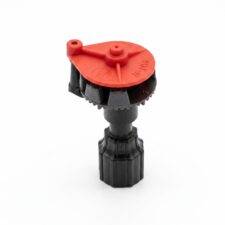
Naan 501 Sprinkler
From: £23.00 (excl VAT)
From: £27.60 (inc VAT)
-
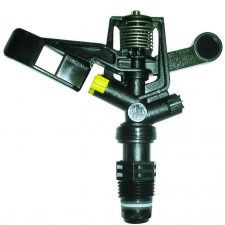
Naan 5022U sprinkler
From: £32.00 (excl VAT)
From: £38.40 (inc VAT)
-
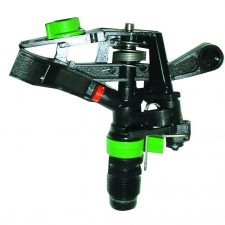
Naan Adjustable – Plastic
From: £24.00 (excl VAT)
From: £28.80 (inc VAT)
-
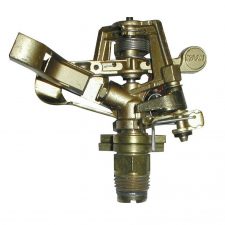
Naan Adjustable Sprinkler – Metal
From: £28.00 (excl VAT)
From: £33.60 (inc VAT)
-
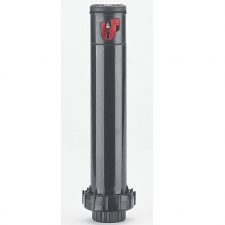
Hunter PGJ Shrub Head – Adjustable Rotor Sprinkler
From: £20.00 (excl VAT)
From: £24.00 (inc VAT)
-
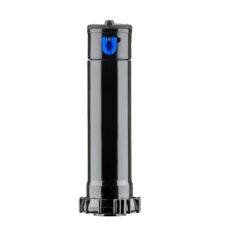
Hunter PGP Ultra shrub head
From: £21.00 (excl VAT)
From: £25.20 (inc VAT)
Our large irrigation sprinklers provide coverage diameters from approximately 9m to more than 31m, depending on the sprinkler, nozzle, operating pressure and required water application rate. Each sprinkler has a BSP thread on the bottom to allow it to be fitted onto a sprinkler riser or pipework.
Commercial sprinklers for nurseries and landscapes
Our range of commercial irrigation sprinklers is suitable for watering plant nurseries, garden centres, landscape areas, parks, estates and other large planted spaces. Available with full-circle or adjustable-arc operation, these sprinklers can be used to water container-grown plants, standing-out beds, shrubs, borders, lawns and open ground. Different models offer a choice of coverage, flow rate and operating pressure, allowing the system to be matched to the available water supply and the size of the area being irrigated. They can be installed on fixed risers or incorporated into permanent and temporary irrigation systems.
Choosing the right irrigation sprinkler
Choosing the right irrigation sprinkler depends on the size and shape of the area, the available water pressure and flow rate, and the type of planting being watered. Consider whether you need full-circle coverage for open areas or an adjustable arc for edges, corners and irregular-shaped sites. The sprinkler’s radius, flow requirement, operating pressure and connection size should all be checked before installation, particularly when several sprinklers will operate at the same time. Correct selection helps achieve even water distribution while avoiding dry areas, excessive overlap and unnecessary water use.
Sprinkler pressure, flow and coverage
The performance of an irrigation sprinkler depends on having sufficient water pressure and flow at the sprinkler head. Higher pressure will generally increase the coverage and improve water distribution, but every sprinkler has a recommended operating range and excessive pressure can produce fine droplets, misting and uneven watering. Flow rate determines how much water each sprinkler uses, so the total demand must be calculated when several sprinklers are operating together. Published coverage figures should be treated as a guide, as the actual throw can also be affected by nozzle size, pipe losses, installation height, wind and site conditions.
| Product | Best suited to | Arc | Pressure | Flow rate | Coverage diameter | Connection |
|---|---|---|---|---|---|---|
| Naan 501 Sprinkler | Low-flow nursery, crop and landscape watering | Full circle | 1.5–3 bar | 200 l/h at 2.5 bar | 12–14m | ½″ BSP female |
| Naan 5022U Sprinkler | Nursery beds, fields and widely spaced sprinklers | Full circle | 2–4 bar | 360 l/h at 2.5 bar | 19m | ½″ BSP male |
| Naan Adjustable – Plastic | Nurseries, field edges and landscape areas | Part or full circle | 1.5–4 bar | 500 or 950 l/h at 2.5 bar | 21–26m | ½″ BSP male |
| Naan Adjustable – Metal | Robust field, nursery and landscape watering | Part or full circle | 1.5–4 bar | 950 l/h at 2.5 bar | 23–28m | ½″ BSP male |
| Hunter PGJ Shrub Head | Garden centre displays and smaller landscape areas | Adjustable 40°–360° | 2.8 bar ideal | 150–1,200 l/h | 9.2–22.6m | ½″ BSP female |
| Hunter PGP Ultra Shrub Head | Large shrub beds, nurseries and landscape areas | Adjustable 50°–360° | 3.4 or 4.1 bar ideal | 110–3,270 l/h | 17–31.6m | ¾″ BSP female |
Need help selecting a sprinkler? Contact our irrigation team with your available pressure, flow rate and required watering area, and we can help identify the most suitable sprinkler and riser combination.
Browse our range of large irrigation sprinklers and order online. We offer FREE delivery on orders over £150 (+VAT)
Frequently asked questions
Are these sprinklers suitable for both nurseries and landscape irrigation?
Yes. These commercial irrigation sprinklers can be used for plant nurseries, garden centres, standing-out beds, landscape areas, parks, estates, sports turf and larger gardens. The most suitable model will depend on the size and shape of the area, the type of planting and the available water pressure and flow.
How much pressure does a large irrigation sprinkler need?
The required pressure varies between sprinkler models and nozzle sizes, but most large irrigation sprinklers operate within a range of approximately 1.5 to 4 bar. Pressure should be measured while the system is running, as static pressure will normally be higher. Operating below the recommended pressure may reduce the sprinkler’s coverage and cause the sprinkler to stop rotating, while excessive pressure can create misting and uneven water distribution.
How do I calculate whether I have enough water flow?
Check the flow requirement of each sprinkler and add the figures together for all sprinklers that will operate at the same time. Your water supply must provide this total flow while maintaining the required pressure at the sprinkler heads. Pipe length, pipe diameter, fittings, valves and changes in ground level can all reduce the pressure available at the sprinkler.
Purchase a pressure test kit to test your water supply prior to purchasing a system. If the available pressure or flow is insufficient, contact us for advice on selecting a correctly sized pump and tank system.
What is the difference between sprinkler radius and diameter?
The radius is the distance the sprinkler throws water from the sprinkler head to the outside edge of the watered area. The diameter is the total width of the watered area from one side to the other, passing through the sprinkler. For example, a sprinkler with a 10m radius provides a maximum coverage diameter of approximately 20m.
Should I choose a full-circle or adjustable-arc sprinkler?
A full-circle sprinkler is normally best for open areas where water is required on every side of the sprinkler. An adjustable-arc sprinkler can be set to water only part of a circle, making it more suitable for boundaries, corners, paths and irregular-shaped areas. Some adjustable sprinklers can also be set to operate as full-circle sprinklers.
Can several sprinklers operate at the same time?
Yes, provided the water supply can deliver the combined flow required while maintaining sufficient pressure. Where the available supply cannot operate all the sprinklers together, the system can be divided into separate watering zones. Each zone is then operated independently using manual or automatic irrigation valves.
Which sprinkler riser do I need?
The correct riser must have a compatible thread size and connection type. Sprinklers may have ½″ or ¾″ BSP connections and these may be either male or female. The sprinkler riser should also be suitable for the required installation height and stable enough to support the sprinkler while it is operating. Taller risers are often used where water needs to clear plants or container-grown crops.
If the sprinkler has a male BSP thread and the riser has a male BSP thread then you need a threaded socket to connect the two.
What do BSP male and BSP female mean?
BSP stands for British Standard Pipe and describes the type and size of the threaded connection. A male BSP connection has an external thread, while a female BSP connection has an internal thread. The sprinkler and riser must have matching sizes and opposite connection types, such as a ½″ BSP male sprinkler fitted to a ½″ BSP female riser.
Can these sprinklers be installed permanently outdoors?
Yes, many commercial irrigation sprinklers can be incorporated into permanent outdoor watering systems. However, the sprinkler and riser should be installed securely and protected from accidental damage by vehicles, machinery or foot traffic. Systems should also be drained or protected against frost during the winter where freezing conditions could damage the sprinkler, pipework or valves.
How far apart should irrigation sprinklers be positioned?
Sprinklers should normally be positioned so that the water from one sprinkler reaches the next sprinkler, creating head-to-head coverage. This overlap helps provide more even watering and reduces dry areas between sprinklers. The correct spacing will depend on the sprinkler’s operating pressure, nozzle, installation height, wind exposure and the shape of the site, so maximum published throw figures should not normally be used as the sprinkler spacing.